

To support our reviews and guides, we participate in the Amazon Associates program. This means that if you click on a link and make a purchase, we may receive a small commission at no extra cost to you.”
I love my golden retriever, Barnaby, but the guy sheds like it is his full-time job. A few years ago, Sunday morning vacuuming was a high-stakes dramatic event in my house. The moment I flipped the switch on my old upright vacuum, Barnaby would scramble across the hardwood, barking furiously at what he clearly believed was a jet engine invading our living room. Meanwhile, my gorgeous wool area rug—the center of my living room decor—was slowly turning into a woven sweater made entirely of dog fur.
Every time I tried to clean the rug, the loud vacuum would suck up the edges, stall the motor, and scream at a volume that made my ears ring. It was stressful, noisy, and inefficient.
If you live with pets and beautiful rugs, you know this struggle all too well. You need serious suction power to pull stubborn pet hair out of carpet fibers, but you do not want a machine that sounds like a lawnmower running in your hallway. The good news? You do not have to choose between a clean rug and a calm, quiet house.
In this guide, I will walk you through how to choose the ideal quiet vacuum for area rugs and pet hair, what features actually matter, and how to keep your home hair-free without scaring your pets.
Why Noise Levels Matter: Decibels Demystified
Before we dive into mechanics, let us talk about sound. Vacuum noise is measured in decibels ($\text{dB}$). The decibel scale is logarithmic, meaning an increase of just $10\text{dB}$ represents a sound that is twice as loud to human (and animal) ears.
A standard traditional vacuum cleaner typically blast sound at75\{dB} to 80\{dB}. To put that in perspective, that is as loud as a garbage disposal or city traffic right outside your window. For dogs and cats, who hear frequencies much higher than we do, that sound is downright terrifying.
A true low noise pet vacuum operates at or below 65\{dB} to 70\{dB}. At62\{dB}, you can comfortably hold a normal conversation, listen to a podcast, or vacuum while your pet snoozes on the couch across the room.
Noise Scale Comparison:
┌─────────────────────────────────────────────────────────────┐
│ 50 dB: Quiet Rainfall                                       │
│ 60 dB: Normal Conversation                                  │
│ 65 dB: Quiet Pet Vacuum (Target Zone)                       │
│ 75 dB: Standard Vacuum Cleaner                              │
│ 85 dB: Heavy Traffic / Lawn Mower                           │
└─────────────────────────────────────────────────────────────┘
How to Clean Area Rugs Without Ruining Them (or Losing Suction)
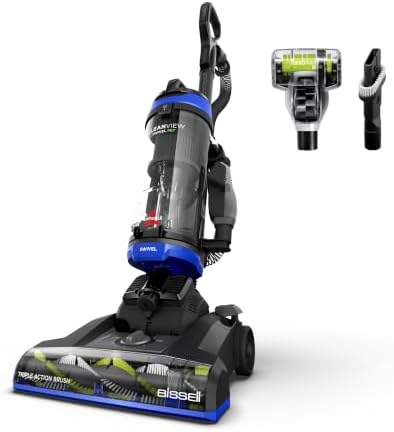
- EVERY PURCHASE SAVES PETS. BISSELL proudly supports BISSELL Pet Foundation and its mission to help save homeless pets.
- NEW 2024 MODEL WITH ACTIVE EXTENSION WAND. Clean hard-to-reach areas quickly and easily.
- SWIVEL STEERING. Maximize maneuverability to clean around furniture and corners.
Area rugs are notoriously tricky. Unlike wall-to-wall carpeting, area rugs can bunch up, shift, or get sucked straight into the vacuum intake if the suction is too strong or the head height is wrong.
To get the best quiet vacuum for carpets and pet hair, look for these crucial features:
1. Variable Suction Control
A strong motor is great for lifting ground-in fur, but max power will clamp down on a delicate area rug like a suction cup. A high suction low decibel pet vacuum with adjustable suction settings lets you dial down the airflow so you can glide smoothly over thin or fringed rugs without dragging them along.
2. Manual Height Adjustment or Brush Roll On/Off
Thick shag rugs and delicate Persian rugs need different treatment. A vacuum that allows you to shut off the motorized brush roll or raise the deck height prevents rug fibers from getting pulled or damaged while still sweeping up surface pet hair.
3. Anti-Tangle Brush Roll
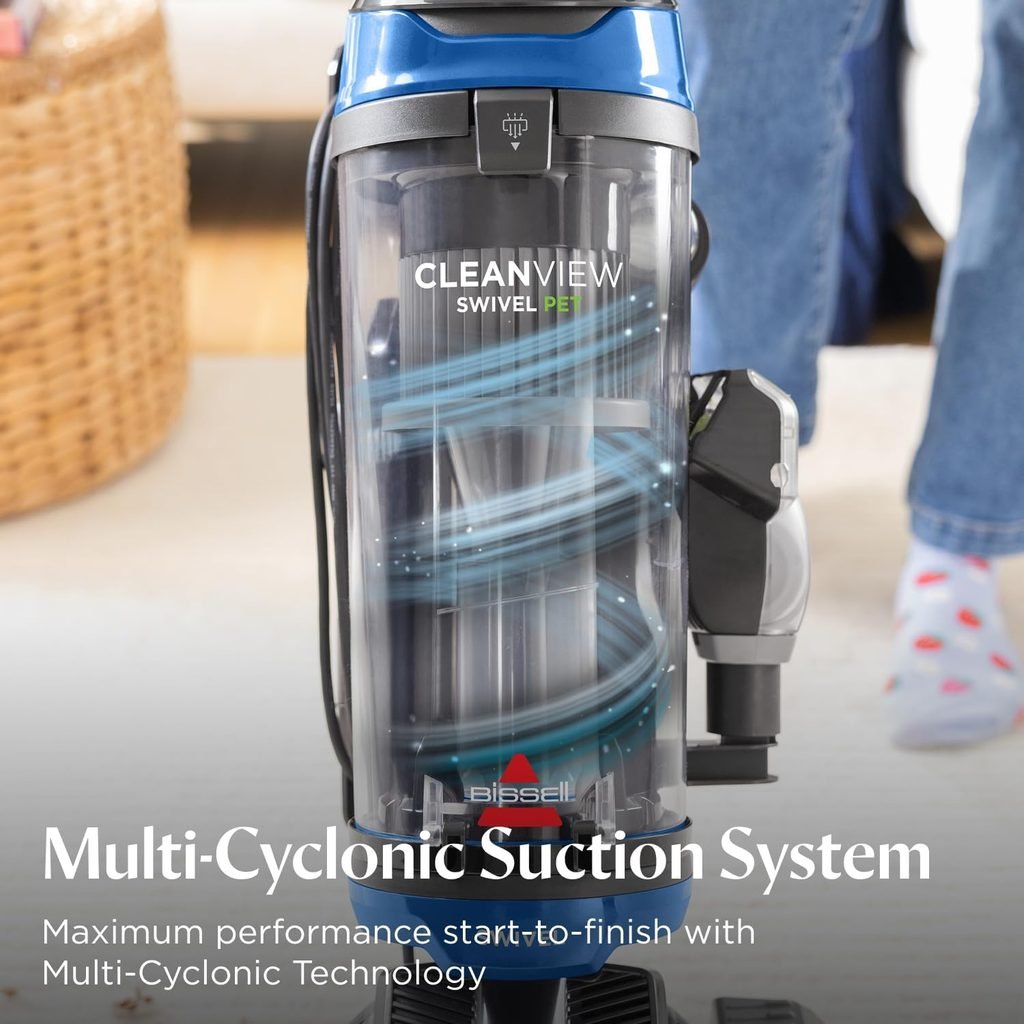
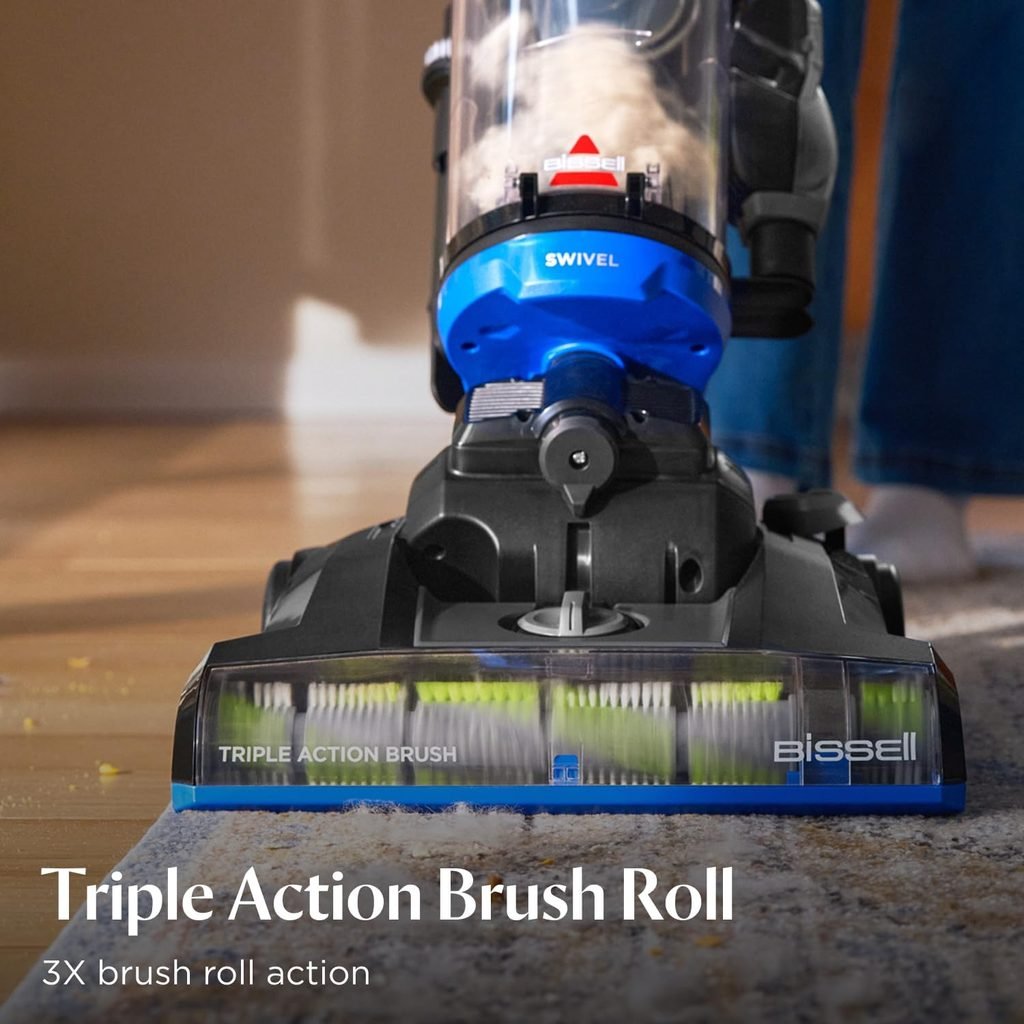
Long pet fur has a habit of wrapping tightly around standard rollers. Look for models equipped with rubberized fins or self-cleaning brush rolls that clear hair as you clean.
Bagged vs. Bagless: Which Is Quieter for Pet Hair?
When shopping for the quietest pet hair vacuum cleaner, one of the biggest decisions is choosing between a bagged or bagless model.
| Feature | Bagged Canister Vacuums | Bagless Upright / Cordless Vacuums |
| Average Noise Level | Very Quiet ($60\text{ dB}$–$68\text{ dB}$) | Moderate to Loud ($72\text{ dB}$–$80\text{ dB}$) |
| Sound Insulation | High (Cloth bag + heavy outer shell) | Low (Clear plastic bin lets sound escape) |
| Suction Consistency | Stays strong as bag fills | Drops if filters get clogged with fur |
| Allergens & Dander | Sealed dust disposal (No dust clouds) | Emptying bin can release dander into air |
| Best For | Deep cleaning thick rugs & nervous pets | Quick daily spot cleanups |
If your primary goal is a quiet canister vacuum for pets, a bagged canister model (like those from Miele or SEBO) is almost always the winner. The thick dust bag and double-walled body act as natural soundproofing insulation, dampening motor whine significantly.
Top Types of Low-Noise Vacuums for Pet Owners
Depending on your daily routine, different styles offer unique advantages for keeping rug fibers free of fur:
1. Quiet Canister Vacuums
- Best For: Deep cleaning high pile rugs, delicate vintage rugs, and whole-house cleaning.
- Why They Work: The heavy motor sits in a canister on wheels on the floor, allowing manufacturers to pack in extra acoustic soundproofing. Models like the Miele Complete C3 Cat & Dog or SEBO Airbelt E3 are legendary for delivering hospital-grade suction while remaining whisper-quiet.
2. Quiet Cordless Stick Vacuums
- Best For: Daily maintenance on low-pile area rugs and quick pet hair pickups.
- Why They Work: Running on standard or Eco mode, a quiet cordless stick vacuum for pet hair keeps noise around $62\text{ dB}$–$66\text{ dB}$. They are lightweight and easy to grab when your dog tracks in dirt. Just keep in mind that switching to “Turbo” or “Boost” mode will noticeably increase the volume.
3. Quiet Robot Vacuums
- Best For: Hands-free background cleaning while you are at work.
- Why They Work: Most modern robot vacuums operate at an ultra-low $55\text{ dB}$ to $62\text{ dB}$. While a robot vacuum for pet hair on area rugs is great for daily surface maintenance, you will still want a deep-cleaning manual vacuum once a week for deeply embedded fur.
Essential Feature Checklist for Pet Owners with Allergies
If you or anyone in your household suffers from seasonal allergies or pet dander sensitivity, noise isn’t the only factor to consider.
- HEPA Filtration: Ensure your vacuum includes a true HEPA filter. A low noise vacuum with HEPA filter for pet allergies captures 99.97% of dust mites, pollen, and pet dander down to 0.3 microns, ensuring clean air is blown back into your living room.
- Sealed System Construction: A vacuum can have a HEPA filter, but if air leaks out through cracks in the plastic housing, dirty air escapes back into your home. Look for “Sealed System” certifications.
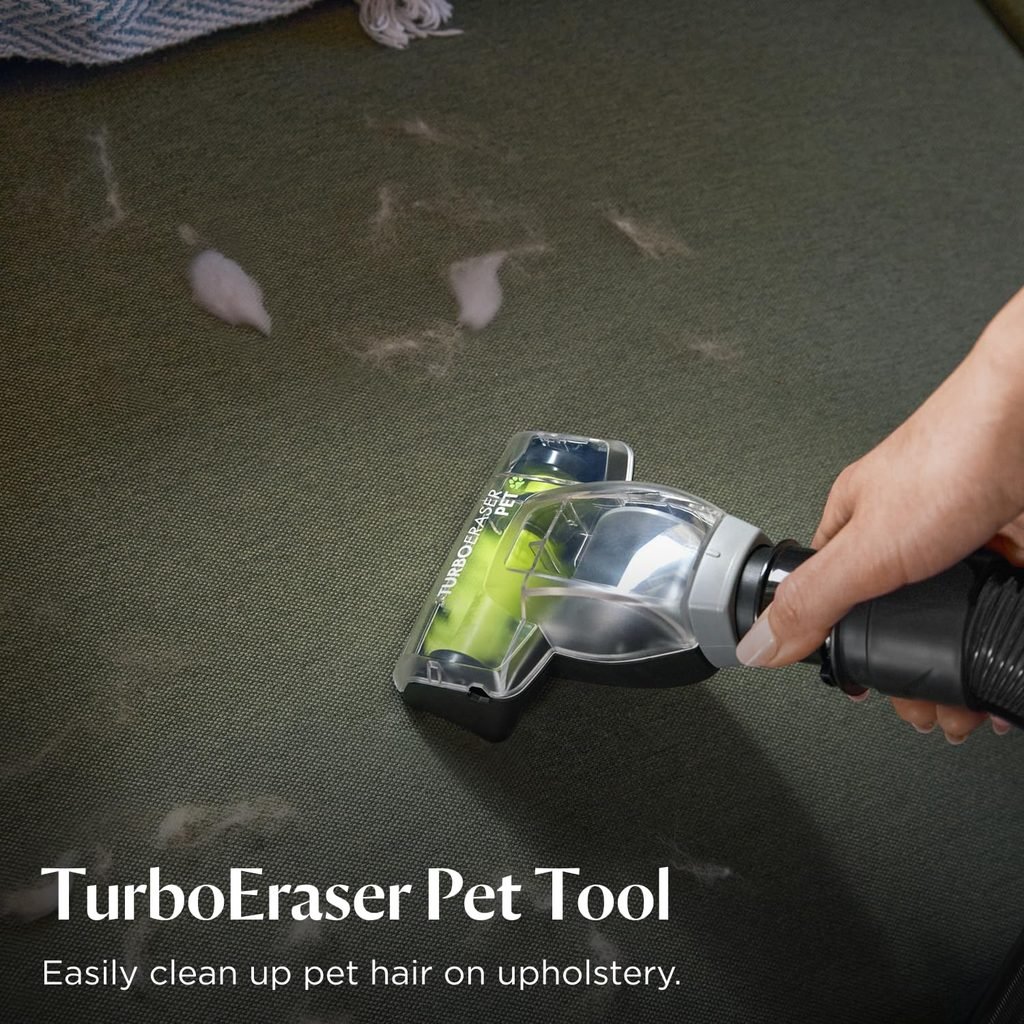
- Specialized Pet Tools: Look for mini-turbo brushes or rubber-bristled stair attachments. These tools scrape pet fur off sofa cushions and rug edges without relying on noisy high-RPM motors.
How to Keep Your Current Vacuum Running Quietly
If your current vacuum suddenly sounds like a jet engine, it might not be broken—it might just need some routine maintenance. Restricted airflow forces the motor to work twice as hard, creating far more noise.
- Clean or Replace Filters: Clogged filters starve the motor of air, creating a high-pitched whine. Wash or swap them every 3–6 months.
- Clear the Brush Roll: Tangled hair around the roller ends creates friction and mechanical grinding sounds. Snip away trapped fur regularly.
- Check for Hose Blockages: A stuck dog treat or clump of hair in the hose creates turbulence, increasing noise levels while ruining suction power.
Frequently Asked Questions (FAQs)
How many decibels (dB) is considered a “quiet” vacuum for pet hair?
A standard vacuum operates at around $75\text{ dB}$–$80\text{ dB}$. A quiet vacuum operates at or below $65\text{ dB}$–$70\text{ dB}$, which is quiet enough to hold a normal conversation and avoid scaring pets.
Can a quiet vacuum have enough suction to pull pet hair out of area rugs?
Yes. Low noise is achieved through insulated motor housings and aerodynamic airflow designs rather than reduced suction power. High-end bagged canister models provide ultra-strong suction at very low noise levels.
Why do area rugs require special vacuum settings when dealing with pet hair?
Area rugs often bunch up or get sucked into high-power brush rolls. A vacuum with adjustable suction control and manual pile-height adjustment allows you to lift pet hair without pulling up or damaging delicate rug fibers.
Are bagged or bagless vacuums quieter for pet hair removal?
Bagged canister vacuums are generally significantly quieter than bagless uprights because the dust bag and heavy outer housing act as natural soundproofing insulation.
Which vacuum brush roll style is best for pet hair on area rugs without making loud noises?
A motorized or anti-tangle brush roll with soft/stiff dual bristles effectively lifts fur. Look for rubberized wheels and belt-driven rollers that reduce mechanical grinding sounds.
Are cordless stick vacuums quiet enough for noise-sensitive pets?
Yes, many cordless stick vacuums running on standard/eco mode emit around $60\text{ dB}$–$68\text{ dB}$. However, turning on “Boost/Turbo” mode will increase noise levels significantly.
How do HEPA filters help when vacuuming pet hair on area rugs?
HEPA filters trap 99.97% of pet dander, dust mite particles, and fine allergens lifted from rug fibers, keeping them from recirculating into the room air.
Will a quiet robot vacuum effectively remove pet hair from area rugs?
Robot vacuums are very quiet ($55\text{ dB}$–$65\text{ dB}$), but they work best for surface hair maintenance. For deep-embedded pet hair in high-pile rugs, a high-suction manual canister or upright vacuum is usually needed.
How can I make my current vacuum quieter when cleaning rugs?
Regularly clean or replace filters, untangle hair from the brush roll, and check for blockages. Motors run significantly louder when airflow is restricted.
What type of vacuum is best for delicate Persian or wool area rugs covered in fur?
A quiet canister vacuum with a designated carpet tool, suction release control, and soft bristles or a suction-only nozzle prevents fiber pulling while effectively removing hair.
Final Thoughts: Peace and Quiet for You and Your Pets
Finding the right quiet vacuum for area rugs and pet hair does not mean sacrificing cleaning performance. By investing in a well-insulated model with adjustable suction and proper filtration, you can keep your area rugs looking pristine, maintain a allergen-free home, and keep your furry friends happy and calm on cleaning day.
What about you? How does your pet react to vacuum day? Let us know in the comments below, or share your favorite low-noise cleaning hacks with our community!


[…] the end of the day, investing in the best corded handheld UV mattress vacuum cleaner isn’t just about fancy gadgets—it is about waking up feeling refreshed, protecting your […]